Highlights
Passages worth keeping, from books, articles, and elsewhere.
The first pages of this collection come from my old Readmill reading journal.
Design Is a Job
Clients value you in direct proportion to how much it costs them. If you have ever
done volunteer work, you may have noticed that the people you were volunteering for
had no trouble making increasing demands on your time. No one is going to value your
work, or your time, if you don’t.
The biggest myth ever perpetuated in the design field is that good design sells
itself. (The second is that Copperplate is a legitimate typeface.)
If you’re working at an agency that won’t let you present your own work, make the
case for how it benefits everyone. It helps you, it helps the client, it helps the
project get done correctly. If they still won’t let you present your own work, get
the hell out.
Don’t waste a client’s time walking them through what they can already see. Your job
is to explain how what they’re looking at is the best way to achieve their goals.
No matter how smart or articulate a person is, no one intuitively knows how to give
useful design feedback. This skill is not part of anyone’s day job (except for art
directors). How to give feedback must be taught.
Of course our dirty little secret is that while we’re telling our clients to be
objective, and to keep personal preferences out of it, there’s nothing we want more
than them to like it. The first step in getting objective feedback is to make sure
we’re giving objective presentations and keeping our own feelings out of the mix.
Focus on: Overall tone (Does this site feel like your company?) Voice (Is it using
language the right way? Is it friendly? Authoritative? Trustworthy?) Structure (Too
dense? Not dense enough?) Ignore: Specific labels and body copy (Why is everything
in Latin?) Missing elements (Where’s my newsletter signup?) Things we did not show
you (I have comments about the company history page.)
Above all, never take on bad terms just to get a job. There are worse things than
being poor. Namely, being poor and owing someone your time.
And if you remember nothing else, don’t walk away from money that’s owed you. Go get
it. You worked for it, you put in honest labor, and it deserves fair compensation.
Get over your awkwardness with money. It’s neither charming, nor “authentic.” You’re
a professional designer, and professionals get paid.
The same goes for that horrid practice of posting your version of a redesign that
has just gone live. By all means, critique it. Write about what works and doesn’t
work, but keep in mind that another designer was working under constraints and
internal politics that you may not be aware of. So write up your thoughts as a user,
even as a user who’s also a designer. But taking the time to redo their work and
posting it publicly is smug and petty.
Seasoned engineers tend not to go for trendy ideas, and have a lot of experience
making pragmatic decisions. They are very good at what they do, as are you. And
you’ll find that if you explain your rationale for your design decisions—as you need
to be able to do with anyone you work with—they are an incredible resource. But as
long as you’re both on separate sides of the gym thinking each other is weird, no
one gets to dance.
Since we’re now far along in the book I believe I can give you some bad news. Almost
no one is coming to the sites you work on because of your excellent design work, and
those few that do are there to steal. People show up for the stuff. Design makes the
stuff easy to find, and a pleasure to use; but it’s not the stuff. The web is made
of content. Design is what holds all that content in place. Don’t feel bad; the
Golden Gate Bridge is only there to help cars get across, but it’s the bridge that
people photograph.
Thousands of people whose names are lost to history who signed the highways, the
subways, our baseball cards, and our cities. And you. You are all designers. You are
all as good or as weak as you choose to be. And you all have an opportunity to leave
your mark of good work on the world. And I pray you use it well.
Bartending: Memoirs of an Apple Genius
Like most Mac users at that time, she had no backup of her files. Even before the
days of Time Machine, as a Genius, the natural tendency was to have a "tough luck"
worldview when it came to data loss. It was easy to look at customers who lost data
and not feel any pity, figuring that they had gotten themselves into that position
by not having a backup of their data. I operated with that mindset a lot of the
time. I think it's fair to say most Geniuses do.
Apple's secrecy helps keep the company ahead of its competition, but that secrecy
sometimes hurts its retail employees, down on the front lines.
The Shape of Design
“Always the beautiful answer who asks a more beautiful question.” E.E. CUMMINGS
The artist, when near, is concerned with production; when far, he enters a mode of
criticism where he judges the degree of benefit (or detriment) the previous choice
has had on the full arrangement.
Beauty is palpable, while intentions and objectives are largely invisible. This
leads us to ask How more frequently, as if the tangibility of these characteristics
were to somehow make them superior. But asking Why unlocks a new form of beauty by
making choices observable so they can be discussed and considered.
A polished axe does not chop better, just as the refined design of a lamp does not
necessarily light a room more fully. Beauty is a special form of craft that goes
beyond making something work better.
One candle can light another, and the light may spread without its source being
diminished. We must sing in our own way, but with the contributions and influence of
others, we need not sing alone.
Ideas build on top of one another, and to do so well, one must be in the moment,
actively poking at the current situation to use its opportunities as material for
construction.
Limitations narrow a big process into a smaller, more understandable space to
explore. It’s the difference between swimming in a pool and being dropped off in the
middle of the ocean with no land in sight.
All design work seems to have three common traits: there is a message to the work,
the tone of that message, and the format that the work takes. Successful design has
all three elements working in co-dependence to achieve a whole greater than the sum
of the individual parts.
Questioning convention can lead to new opportunities by making good on the potential
of fresh configurations of the three levers
The faster horse is a recombination of the three levers in a predictable way: the
customer’s answer is staunchly loyal to the horse, the already established format of
transportation. They are inside of the adjacent possible, and ask a How question:
How can horses be better?
Modern people, unlike the ancients, have a different relationship with the future,
because we understand that it’s something to be made rather than a destiny imposed
by the gods or the whims of fortune.
Design and persuasion are manipulative, and if we have the skills to seduce others
toward green pastures, we can also lead them off a cliff.
CSS3 for Web Designers
It requires simply creating a new declaration and adding the :focus pseudo-class to
the attribute selector for text inputs. (By the way, the preceding paragraph is a
sure-fire pickup line, should you be in need of one. Thank me later.)
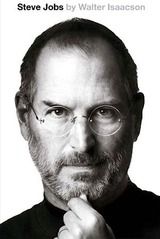
Steve Jobs
“I typed a few keys on the keyboard and I was shocked! The letters were displayed on
the screen.” It was Sunday, June 29, 1975, a milestone for the personal computer.
“People who are serious about software should make their own hardware.”
“They were copier-heads who had no clue about what a computer could do,” he said of
Xerox’s management. “They just grabbed defeat from the greatest victory in the
computer industry. Xerox could have owned the entire computer industry.”
ideas are only part of the equation. Execution is just as important.
“We were very relieved,” he recalled. “We knew they hadn’t done it right, and that
we could—at a fraction of the price.” A few weeks later he called Bob Belleville,
one of the hardware designers on the Xerox Star team. “Everything you’ve ever done
in your life is shit,” Jobs said, “so why don’t you come work for me?” Belleville
did, and so did Larry Tesler.
One of the engineers told Atkinson that there was no way to build such a mouse
commercially. After Atkinson complained to Jobs over dinner, he arrived at the
office the next day to discover that Jobs had fired the engineer. When his
replacement met Atkinson, his first words were, “I can build the mouse.”
Jobs’s belief that you could distort reality if you had enough passion for your
product.
different type of project manager, willing to make some trade-offs, might try to
lock in dates after which no changes could be made. Not Jobs. He displayed another
maxim: “It’s not done until it ships.”
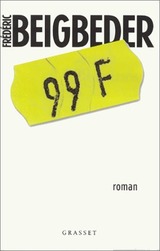
99 Francs
On ne peut pas à la fois obéir au monde et le transformer. Un jour, on étudiera à
l'école comment la démocratie s'est autodétruite.
Tandis qu'au bordel, l'homme se laisse aller, ne cherche plus à plaire, à se montrer
meilleur qu'il est. C'est le seul endroit faux où il est enfin vrai, faible, beau et
fragile. Il faudrait écrire un roman intitulé « L'amour coûte 500 euros ».
Comment on fait pour se réveiller, quand on ne dort pas ?
Le monde entier est prostitué. Payer ou être payé, telle est la question. Grosso
merdo, jusqu'à la quarantaine on est payé; après, on paye les autres, c'est ainsi -
le Tribunal de la Beauté Physique est dépourvu d'appel.
Dans une société bloquée ou tout le monde est coupable, le seul crime est de se
faire prendre. Dans un univers de voleurs, le seul péché définitif est la stupidité.
Connaissez-vous la différence entre les riches et les pauvres? Les pauvres vendent
de la drogue pour s'acheter des Nike alors que les riches vendent des Nike pour
s'acheter de la drogue.

L’Énigme du retour ↗
Le galop dans la morne plaine du temps
avant de découvrir
qu’il n’y a dans
cette vie
ni nord ni sud
ni père ni fils
et que personne
ne sait
vraiment où aller.